

How To Use K18 And Olaplex Together
Introduction
Developing a consistent regimen requires understanding how to use K18 and Olaplex together to ensure both treatments function optimally. When learning how to use K18 and Olaplex together, it is essential to consider the distinct chemical nature of these treatments to avoid potential interference during application.
This article covers the chemical considerations for integrating these treatments and provides a clear routine for combining bond builders for hair. You will learn the recommended hair repair product order, how to manage frequency to avoid over-processing, and the importance of pH levels when using these formulas. By following these guidelines, you can incorporate both systems into your routine while maintaining the integrity of your hair cuticle and internal structure.
Understanding the Interaction of Repair Technologies
You can integrate these two repair systems into your hair care regimen by focusing on their distinct chemical roles and application requirements. Rather than treating them as identical solutions, consider how each product interacts with the hair structure to address damage. Combining these technologies effectively relies on understanding the specific mechanics of each formula.
These products target the internal integrity of the hair shaft through different pathways. One approach often involves addressing the structural framework of the hair, while the other focuses on internal peptide restoration. Because each system operates with its own specific pH levels and application protocols, using them together requires a measured approach to ensure each product can perform its function without interference.
When you look at how to use K18 and Olaplex together, you must account for the following factors:
- The specific rinsing or leave-in requirements for each formula.
- The order of application based on whether a product acts as a pre-shampoo treatment or a post-wash restorative agent.
- The potential for product buildup if too many treatments are layered simultaneously.
- The overall health and porosity of your hair, which dictates how much repair it can realistically absorb.
Integrating these systems is not about layering as many products as possible. Instead, it is about creating a schedule that allows each technology to reach the hair cortex. If you apply a treatment that is intended to be washed away, it may physically block a subsequent leave-in product from penetrating the cuticle. Similarly, using high-intensity treatments too frequently can lead to hair that feels stiff or brittle, rather than supple and restored.
Before you start, assess whether your current routine is truly optimized for your specific hair needs. Some users find that rotating these technologies on different wash days provides better results than attempting to use them in a single session. By alternating your approach, you allow the hair to reset while ensuring that you are not overwhelming your strands with excessive chemical activity. Always monitor how your hair responds to these combinations, as individual hair types react differently to concentrated repair ingredients.
K18 vs Olaplex Differences
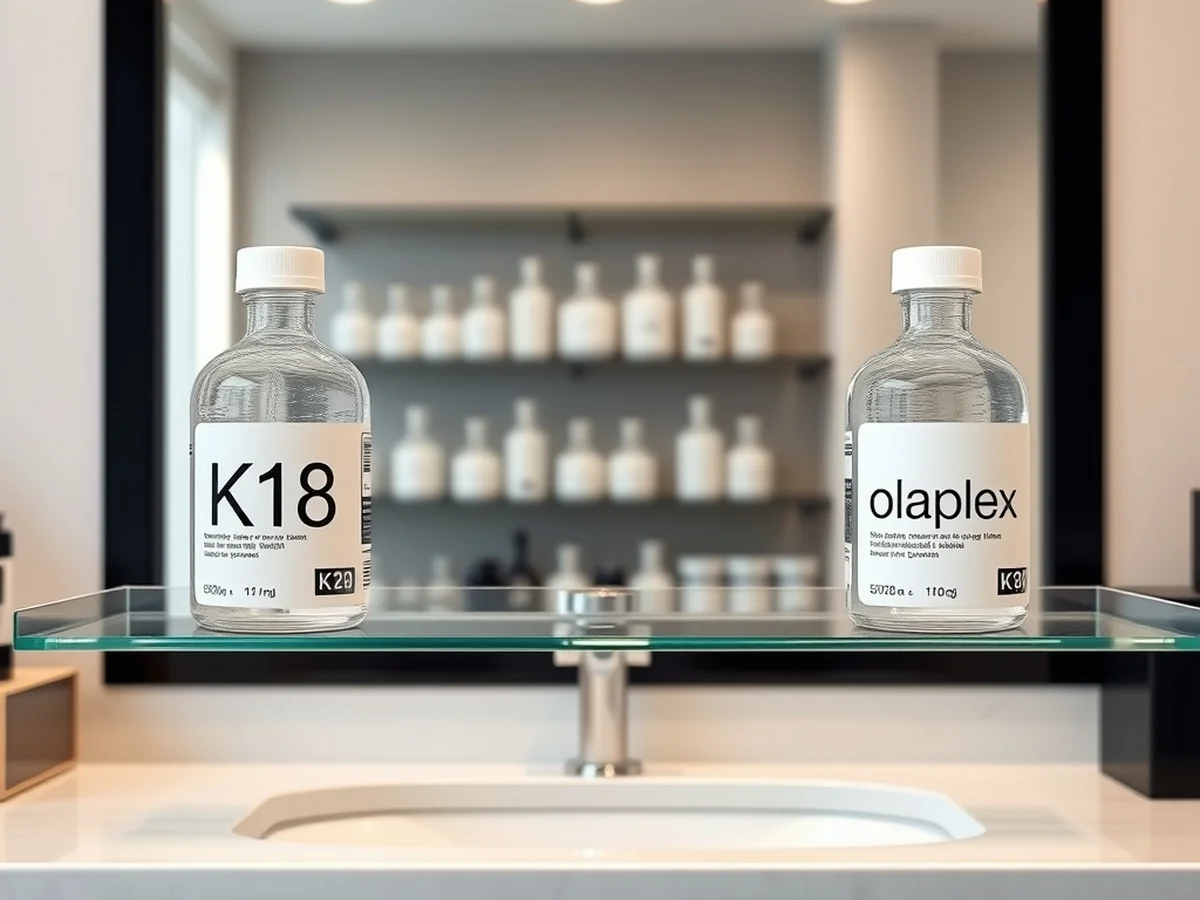
K18 and Olaplex utilize distinct chemical technologies designed to address hair integrity, making them fundamentally different in both composition and mechanism of action. While both systems aim to improve hair health, they function through unique molecular pathways.
Olaplex features the patented ingredient bis-aminopropyl diglycol dimaleate. This molecule is engineered to interact with the disulfide bonds within the hair structure. By focusing on these internal connections, the treatment seeks to maintain the structural stability of the hair shaft, which is often compromised during chemical or thermal styling processes.
K18 employs a different approach by utilizing specific bioactive peptides. These peptides are designed to penetrate the inner layers of the hair to interact with keratin chains. The goal is to address the polypeptide chains that form the core structure of the hair fiber, potentially helping to restore the hair’s natural elasticity and strength from the inside out.
The hair cuticle plays a significant role in how effectively these products penetrate the hair shaft. A healthy, closed cuticle acts as a protective barrier, which can limit the absorption of various treatments. When the cuticle is damaged or raised, it may allow for easier penetration, but it also indicates a higher level of existing structural stress.
Understanding these mechanisms is essential when considering combining bond builders for hair. Because each system targets different internal components, they do not necessarily compete for the same reaction sites. However, the order of application and the state of the hair cuticle remain critical factors for efficacy.
- Bis-aminopropyl diglycol dimaleate focuses on disulfide bonds to support hair structure.
- Bioactive peptides are engineered to engage with damaged keratin chains.
- Cuticle integrity dictates how deeply these molecules can travel into the cortex.
Effective repair routines require acknowledging that these treatments are not interchangeable. Using them requires an understanding of how product absorption is mediated by the surface layers of the hair. While both are intended for hair that has undergone chemical processing, their distinct methods mean they interact with the internal architecture of the strand in different ways. Monitoring hair health is important to avoid the potential for product buildup, which can occur if the hair cuticle is saturated with too many treatments at once.
pH Levels in K18 and Olaplex

The pH level of a hair product plays a critical role in how the hair cuticle behaves. A properly balanced pH allows the cuticle to remain sealed, which protects the hair shaft and maintains its integrity. When products deviate too far from the natural acidity of hair, the cuticle may lift or remain open, leading to unwanted texture changes.
Olaplex No. 3 and K18 operate within different acidic ranges. Generally, Olaplex No. 3 is formulated to be more acidic, while K18 typically sits closer to the natural pH range of healthy hair. Understanding this difference is essential when layering products to avoid disrupting the protective barrier of the hair cuticle.
Maintaining pH equilibrium is vital to prevent hair stiffness. If the cuticle layer is repeatedly subjected to extreme pH fluctuations, the hair can become brittle, dry, or rigid. This is particularly relevant when combining bond builders for hair in a single routine. If the hair environment becomes too acidic or too alkaline, the structural components of the strand may lose their flexibility, leading to the sensation of hair stiffness or straw-like texture.
To keep the hair in a balanced state, consider these factors regarding product interaction:
- The cuticle serves as the primary barrier against environmental damage and chemical stress.
- Products with significantly low pH levels may tighten the cuticle, while higher pH levels can cause it to swell.
- Using multiple treatments in quick succession requires the hair to stabilize between applications.
- Hair that feels stiff or brittle is often a sign that the structural balance has been compromised by inconsistent pH application.
By spacing out treatments that have distinct acidity levels, you allow the hair to return to its natural equilibrium. This approach minimizes the risk of overloading the hair shaft with competing chemical environments. When planning your hair repair product order, prioritize giving your hair time to reset before introducing a different treatment, ensuring that the cuticle remains smooth and the internal structure stays flexible.
Optimizing Your Application Routine
To successfully integrate both repair systems, prioritize the order of operations based on whether the formula requires a rinse or is designed to remain in the hair. Using K18 and Olaplex together on the same day is possible if you follow a sequential process that respects the specific intended use of each treatment.
The correct hair repair product order is dictated by the chemical nature of the applications: pre-wash treatments must precede your cleansing routine, while leave-in treatments are applied after the hair is clean and free of heavy residue. Introducing these products out of sequence may prevent effective absorption, as residues from conditioners or styling agents can form a barrier on the cuticle. Following this structured approach ensures each formula interacts directly with the hair shaft:
- Start by applying your pre-shampoo treatment to damp, towel-dried hair and allow it to sit for the recommended duration before rinsing.
- Cleanse your hair thoroughly with shampoo to remove the pre-treatment and any existing surface impurities.
- Do not apply conditioner after shampooing if you intend to use a leave-in molecular repair treatment next, as conditioner can inhibit penetration.
- Apply the leave-in treatment to clean, damp hair, working it through evenly from ends to roots.
- Wait for the leave-in treatment to fully set before applying any other styling products or heat tools to the hair.
- Finish your routine by applying your usual styling products once the repair mask has been absorbed.
Timing remains critical for each formulation to reach its maximum potential. Pre-shampoo treatments typically require a specific waiting period to interact with the hair, while leave-in masks often need a few minutes of processing time before they become inactive. If you rush the application or rinse prematurely, you may limit the efficacy of the bioactive peptides or bonding ingredients. Always check the specific processing requirements provided by each manufacturer to ensure you are meeting the minimum time needed for the formula to perform as intended.
Consistency in your routine is more important than using both products simultaneously in every wash cycle. Because these treatments are designed for intensive repair, alternating their use throughout the week can often yield better results than layering them in a single session. This method reduces the risk of product buildup while allowing you to benefit from the distinct repair mechanisms of both systems.
Combining K18 and Olaplex Safely

You can safely integrate these two repair technologies by rotating them across different wash days rather than attempting to layer them simultaneously. Using both products during the same session often results in redundant application or product buildup, which does not provide additional benefit to the hair cuticle.
Low porosity hair is particularly susceptible to protein overload, which occurs when hair receives more structural reinforcement than it can absorb or utilize. If you notice your hair feeling unusually stiff, brittle, or resistant to moisture despite regular conditioning, you may be using too many strengthening treatments. Because these systems focus on structural integrity, applying them back-to-back can leave a heavy residue that prevents hydration from penetrating the hair shaft.
To determine how often to rotate between systems, assess your hair’s current condition and your history of chemical processing. Those with significant damage from bleaching or heat styling might start with a more frequent schedule, while healthy hair requires less intensive maintenance. A common strategy involves alternating your repair sessions: use one system for a few weeks, then switch to the other to observe how your hair responds to each approach.
Avoiding hair brittleness through intentional scheduling is essential for long-term health. Instead of treating every wash day as a repair day, prioritize a balance between strengthening treatments and moisture-focused products. If your hair begins to feel coarse or loses its natural elasticity, pause all repair treatments and focus exclusively on hydration until the hair regains its softness.
When refining your routine, consider these indicators to help manage your schedule:
- Increased hair breakage despite regular treatment usage often suggests the hair is becoming overly rigid.
- A lack of shine or dullness can be a sign of product accumulation on the surface of the cuticle.
- Difficulty styling or hair that feels weighted down frequently points to over-saturation with repair formulas.
Developing an effective Olaplex vs K18 routine requires patience. By observing your hair over several weeks, you can identify which technology provides the most visible improvement for your specific needs. Keep your schedule consistent for at least a month before making adjustments to ensure you are accurately evaluating the results of your chosen rotation.
Layering K18 and Olaplex
You can layer K18 and Olaplex in your hair care routine, but effective application depends on respecting the distinct usage requirements of each product. Understanding how these systems function separately helps ensure you do not inadvertently compromise the performance of either treatment.
| Feature | Olaplex No. 3 | K18 Leave-In Mask |
|---|---|---|
| Hair State | Damp, towel-dried | Clean, damp |
| Rinse Requirement | Must be rinsed out | Leave-in formula |
| Application Timing | Pre-shampoo | Post-shampoo |
Olaplex focuses on bond maintenance, while K18 utilizes a peptide-based approach designed to address hair structure. Because they operate through different mechanisms, they do not necessarily cancel each other out, provided you follow the correct sequence. Using them in the wrong order, however, may create a barrier on the hair shaft that prevents effective absorption.
When considering whether you can layer K18 and Olaplex, prioritize the specific application environment for each. Olaplex is typically designed as a pre-shampoo treatment, meaning it requires rinsing before you proceed with your usual cleansing and conditioning steps. In contrast, K18 functions as a leave-in treatment that should be applied to clean, damp hair, ideally after you have finished washing and conditioning.
Applying a leave-in product like K18 before a treatment that requires rinsing, such as Olaplex, would likely wash away the active ingredients before they can work. To maintain the most effective sequence for your hair repair, apply the rinse-out treatment first, shampoo, and then apply the leave-in mask to clean hair. This method ensures that the cuticle is prepped correctly for each step.
Be mindful that using multiple intensive treatments simultaneously can occasionally lead to product buildup or hair that feels stiff. If you notice your hair becoming brittle or excessively coated, consider rotating your use of these products rather than combining them on the same day. Evaluating your hair porosity and overall health helps determine if your routine requires both, or if alternating them provides the best balance of structural support and manageability.
Professional Advice for Combination Use
Consulting a professional stylist is necessary when you encounter persistent breakage that does not improve with at-home treatments. A professional assessment identifies whether the structural integrity of your hair requires intensive salon intervention rather than consumer-grade bonding products.
Chemical damage levels often exceed what topical treatments can address alone. A stylist evaluates the hair cuticle and cortex to determine if the damage is superficial or if the internal architecture is severely compromised. When hair reaches this stage, layering repair products may be ineffective or lead to unwanted textures.
Your hair porosity is a key factor in determining if a home-based repair regimen is appropriate. Highly porous hair, often the result of significant chemical over-processing, may struggle to retain the beneficial ingredients found in repair masks or bond builders. A professional can perform a porosity test to gauge how well your hair absorbs and holds moisture and repair components.
If your hair feels consistently brittle, gummy when wet, or snaps easily under gentle tension, it may be too compromised for standard repair routines. Using multiple concentrated formulas on hair with extreme porosity can sometimes exacerbate dryness or lead to a stiff, unnatural feel. Professionals may recommend a series of salon-only treatments to stabilize the hair before you attempt to integrate at-home systems.
Consider these professional guidelines when evaluating your hair health:
- Assess if the damage is localized to the ends or present throughout the entire hair shaft.
- Check for changes in curl pattern or texture, which often signal deep structural distress.
- Discuss your history of bleaching, heat styling, and chemical straightening with a stylist to build a realistic recovery timeline.
- Determine if your hair requires a moisture-focused approach or a protein-focused approach, as using both simultaneously can lead to imbalance.
Seeking an expert opinion ensures that you do not waste resources on incompatible routines. A stylist can design a tailored recovery plan that bridges the gap between salon services and the maintenance products you use at home. This strategic approach prevents the risk of over-processing and helps restore your hair to a manageable state more efficiently than trial and error.
FAQ
Can you use K18 and Olaplex on the same day?
While you can technically use both treatments, applying them during the same wash cycle is generally discouraged to avoid potential ingredient interference. Most routines suggest alternating these products on different wash days to allow each technology to interact with the hair shaft effectively.
What is the correct order of application if I must use them together?
If you choose to use both in one session, the Olaplex treatment should typically be applied first to damp hair, rinsed out, and followed by shampoo. After washing, you would then apply the K18 leave-in treatment to clean, damp hair, ensuring no other styling products or conditioners are applied beforehand.
Does using K18 and Olaplex together cause damage?
Combining these treatments does not inherently cause damage, but using too many intensive repair products can lead to product buildup or hair that feels stiff and brittle. Excessive use of protein-heavy or bonding products may overwhelm hair, particularly if your hair has low porosity.
How often should I use these bond builders?
Frequency depends on the individual needs of your hair and the instructions provided by each manufacturer for their specific formulas. It is common practice to start with a conservative schedule, such as using each treatment once a week, and adjusting based on how your hair responds over time.
Is it better to rotate or layer these products?
Rotating these treatments between wash days is often considered more efficient than attempting to layer them simultaneously. By spacing out your repair sessions, you provide the hair with different types of care without the risk of one formula inhibiting the absorption or performance of the other.
Conclusion
Deciding whether to incorporate both systems into your regimen depends on your specific hair needs and the current state of your strands. If you are unsure how to use K18 and Olaplex Together, the most effective approach is to rotate them rather than layering them in a single session. Start by alternating these treatments on different wash days to observe how your hair responds to each technology. Monitor your hair texture closely for signs of stiffness or brittleness, which can indicate that your routine needs adjustment.
You might also like: K18 Vs Olaplex For Fine Hair K18 Vs Olaplex For Fine Hair


4 Comments